IN COOPERATION WITH FRAUNHOFER IKS
BEYOND SAFETY FORUM
The Beyond Safety Forum continues its journey in 2026 – next stop: “Safety in the Era of AI-powered Robotics”

- How can we ensure safety as AI-powered robotics increasingly shape industrial applications?
- What challenges arise when intelligent systems make autonomous decisions, adapt dynamically to their environment, and collaborate closely with humans?
- How do we balance innovation with regulatory compliance while ensuring certifiable safety?
These and similar questions will guide us through the next iteration of our event.
We invite end-users, industry experts, researchers, and safety innovators to join our journey. During this one-day event, focus talks by distinguished speakers will highlight key challenges and opportunities, fostering discussion and exchange.
We believe that the path towards safe AI-powered robotics goes beyond established approaches – and this is why we emphasize the importance of collaboration and dialogue in shaping future solutions.
Join us on December 3, 2026 – either at the SIA Academy in Buchholz, near Freiburg, or virtually.
Impressions

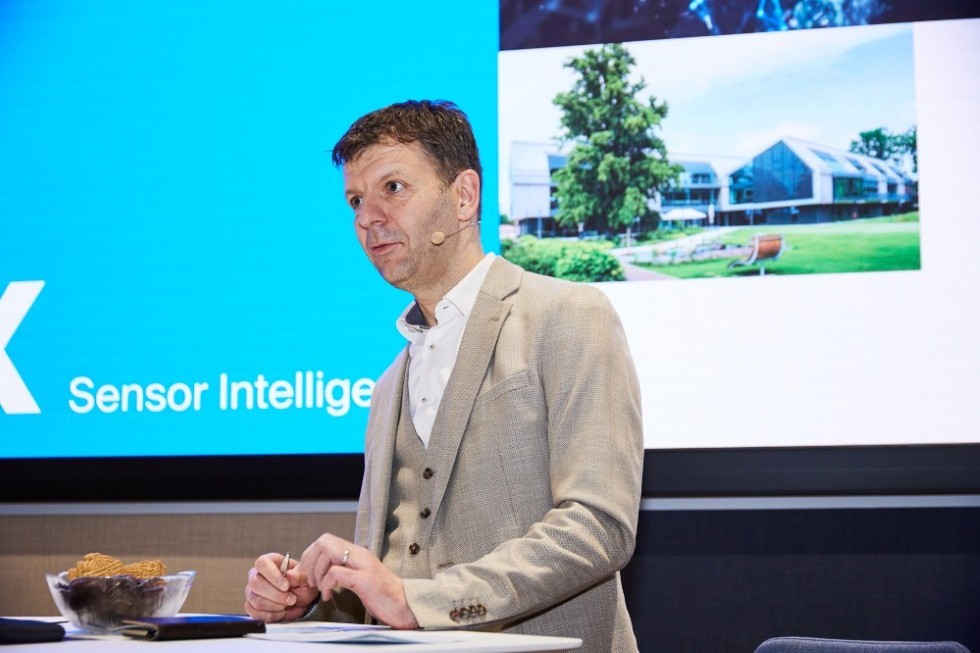

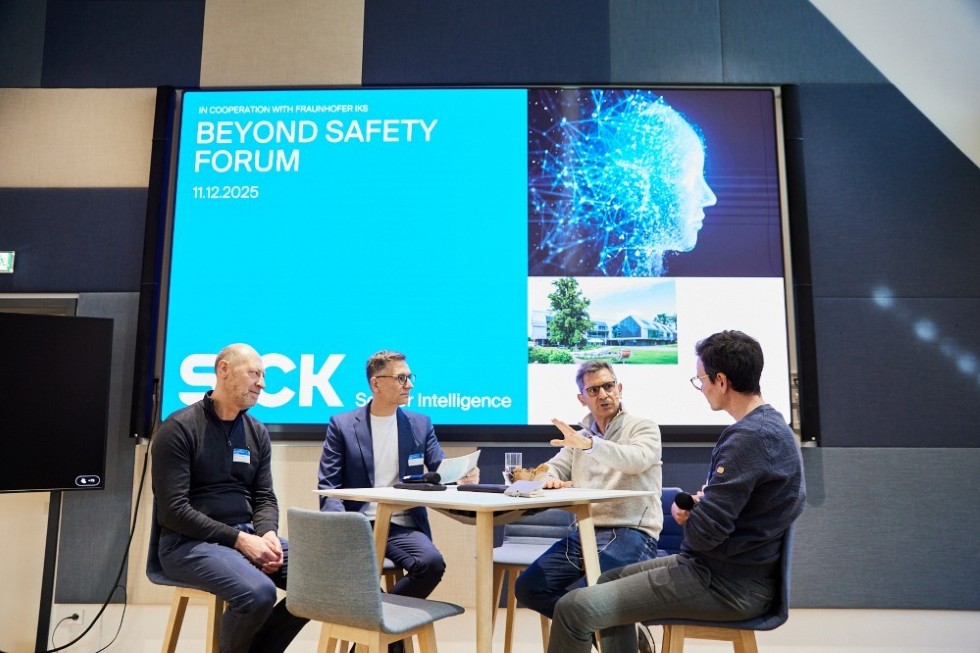
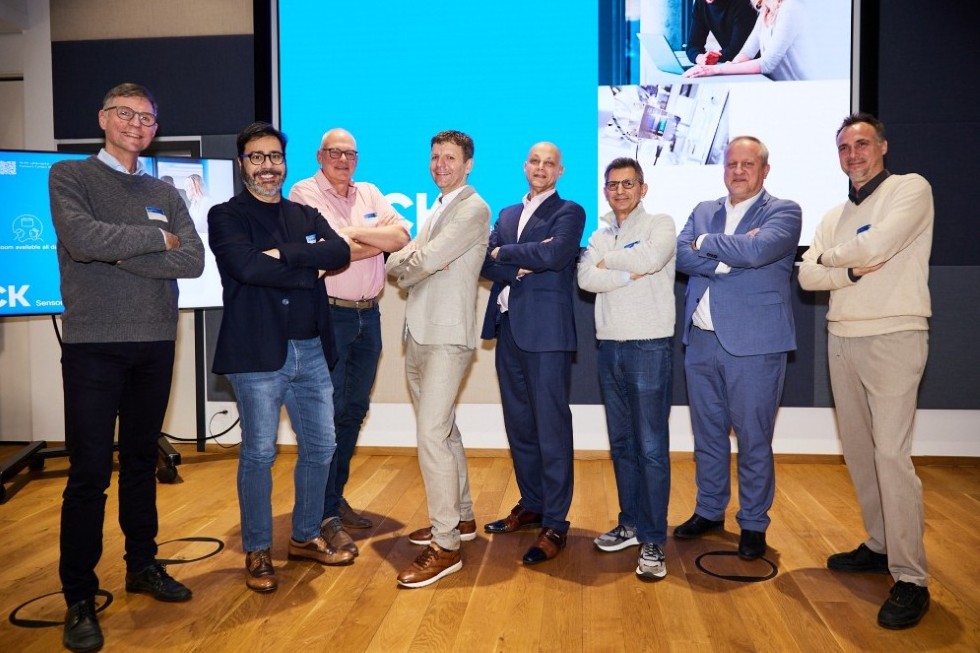
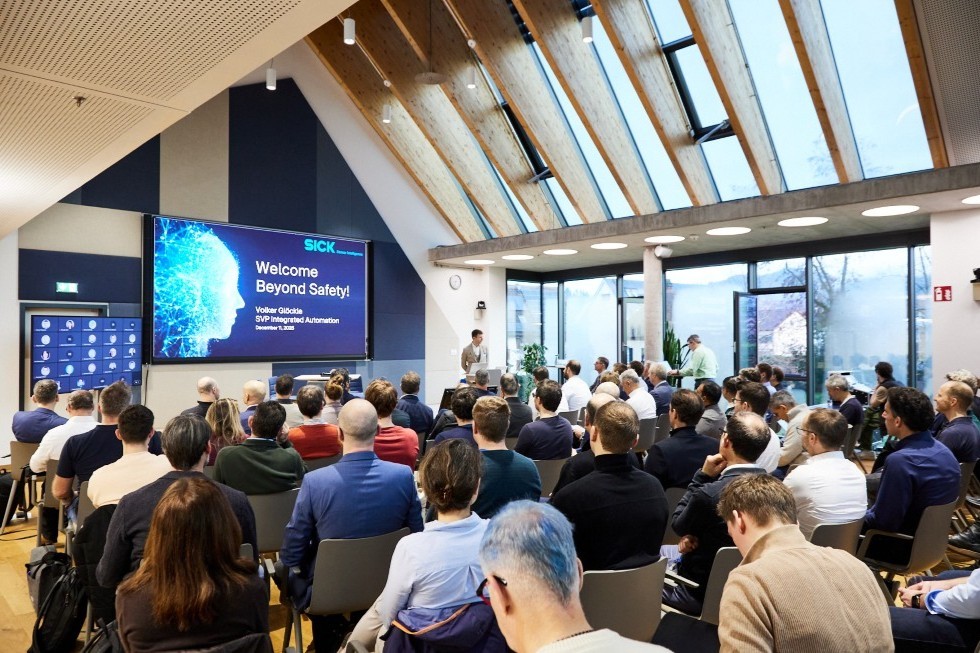
Explore previous speakers
2022
Sami Haddadin (MIRMI/TUM)
Moritz Tenorth (CTO Magazino)
Martin Teuchler (Kamag)
Mario Trapp (Fraunhofer IKS)
Max Walter (Siemens AG)
Martin Wüstefeld (SICK AG)
2023
Riccardo Mariani (NVIDIA)
Takehito Ogata (Hitachi Europe GmbH)
Martin Ruskowski (smartfactory)
Philip Koopman (Carnegie Mellon University)
Arne Nordmann (Neura Robotics GmbH)
Dominic Ruh & Steffen Wittmeier (SICK AG)
2024
Anders Billesø Beck (Universal Robots A/S)
Alexander Wischnewski (driveblocks GmbH)
Stefan Kriso (Robert Bosch GmbH)
Daniel Leidner (Deutsches Zentrum für Luft- und Raumfahrt DLR)
Karsten Roscher (Fraunhofer IKS)
Robert Weber (The Industrial AI Podcast)
2025
Giulio Corradi (AMD)
Jérémie Guiochet (University Toulouse)
Frank Köster (DLR)
Björn Matthias (ABB)
Robert Puto (TÜV SÜD)
Federico Vicentini (Boston Dynamics)
Invited speakers
09:00 a.m.
Real-Time Safety Engineering for Advanced Robotics at Scale
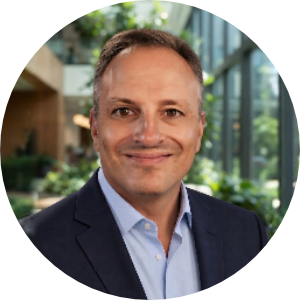
Gianpiero Negri
Fellow, Robotics Functional Safety, NXP Semiconductors
more details
Gianpiero Negri is Fellow for Robotics Functional Safety at NXP Semiconductors, where he drives design compliance strategy, AI and functional safety frameworks, and global safety governance for large-scale robotic systems. Prior to joining NXP, he served as Global Head of the Robotics Safety Center of Excellence at Amazon Robotics, and before that as Principal Manager in EU R&D Robotics Safety Engineering at Amazon Robotics Advanced Technology, EU Advanced Technology Machine Safety Manager, and Global Functional Safety Manager at CNH. He holds a PhD in Applied Mathematics (Robotics AI Safety), a Post-MSc in Industrial Robotics and Functional Safety (CNR-ITIA), and an MSc in Computer Engineering (summa cum laude, Università di Salerno), and is certified in functional safety (CMSE) and AI/ML (IBM and Stanford).
Gianpiero is an active contributor to international standardization, serving on ISO TC299, ISO/IEC JTC1 SC42, and CEN/CENELEC JTC21 committees. He has presented at leading safety and robotics conferences including the MIT STAMP/STPA Workshop (Cambridge, MA), SAFECOMP/WAISE, ICRA, IRSC, NVIDIA GTC, etc. Real-Time Safety Engineering for Advanced Robotics at Scale
As robotic systems become more adaptive and complex, safety can no longer rely on one-time validation before deployment. This talk explores how real-time monitoring, adaptive control, and online verification are needed to continuously ensure safety during operation. It also highlights how established safety principles are challenged when scaling from single certified systems to large fleets deployed across multiple sites. Maintaining consistency, robustness, and trust in safety at scale becomes a key issue for next-generation robotics.
Gianpiero is an active contributor to international standardization, serving on ISO TC299, ISO/IEC JTC1 SC42, and CEN/CENELEC JTC21 committees. He has presented at leading safety and robotics conferences including the MIT STAMP/STPA Workshop (Cambridge, MA), SAFECOMP/WAISE, ICRA, IRSC, NVIDIA GTC, etc. Real-Time Safety Engineering for Advanced Robotics at Scale
Real-Time Safety Engineering for Advanced Robotics at Scale
As robotic systems become more adaptive and complex, safety can no longer rely on one-time validation before deployment. This talk explores how real-time monitoring, adaptive control, and online verification are needed to continuously ensure safety during operation. It also highlights how established safety principles are challenged when scaling from single certified systems to large fleets deployed across multiple sites. Maintaining consistency, robustness, and trust in safety at scale becomes a key issue for next-generation robotics.
10:30 a.m.
Model-centric safety assurance of autonomous systems
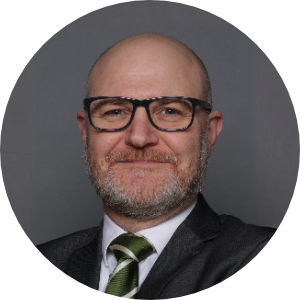
Simon Burton
Chair of Systems Safety at the University of York
more details
Prof, Simon Burton, PhD, holds the Chair of Systems Safety at the University of York, UK and is also Business Director of the Centre for Assuring Autonomy. He graduated in computer science at the University of York in 1996, where he also achieved his PhD on the topic of the verification of safety-critical software in 2001. Professor Burton has worked in various safety-critical industries, including more than 20 years as a senior manager in automotive companies. During this time, Simon managed research and development projects and led consulting, engineering services, product, and research organisations in various director-level positions.Simon’s personal research interests include the safety assurance of complex, autonomous systems and the safety of machine learning. He has published numerous academic articles covering a wide variety of perspectives within these fields, such as the application of formal methods to software testing, the joint consideration of safety and security in system analysis and design, as well as regulatory considerations and addressing gaps in the moral and legal responsibility of artificial intelligence (AI)-based systems. Professor Burton initiated the ISO working group ISO TC22/SC32/WG14 “Road Vehicles—Safety and AI” and was convenor of this group until February 2026. As part of this role, he also led the development of the standard ISO PAS 8800 “Safety and AI” released in December 2024.
Model-centric safety assurance of autonomous systems
As AI-based autonomous systems move from research labs into safety-critical deployments, traditional assurance frameworks are struggling to keep pace. This talk examines how we can build assurance cases for AI systems based on models of the environment. In particular, we explore how increased rigour in the specification of the operating context can support the system derivation of safety requirements, safety analysis, assurance and run-time monitoring. Furthermore, we demonstrate how these models can form the basis for an iterative, tool-supported and reflective process that reduces confidence gaps in assurance arguments over time..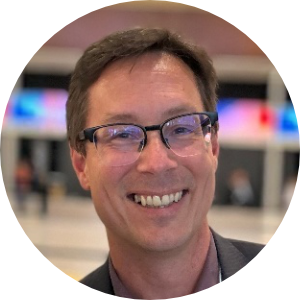
11:30 a.m.
Describing and measuring AI quality: the new frontier
Sebastian Hallensleben
Chief Trust Officer at Resaro Europe Gmbh
more details
Dr. Sebastian Hallensleben is the Chair of CEN-CENELEC JTC 21 where European AI standards to underpin EU regulation are being developed, and co-chairs the AI risk and accountability work at OECD. As Chief Trust Officer at Resaro, he works towards drilling down to ground truths about capabilities of AI systems and towards standards for measuring use-case-specific AI quality characteristics, including in ETSI MTS. Sebastian is the initiator and Programme Chair of the Digital Trust Convention and is Principal Advisor Digital Trust at KI Park. - Previously, Sebastian headed Digitalisation and Artificial Intelligence at VDE Association for Electrical, Electronic and Information Technologies. He focuses in particular on operationalising AI ethics, on characterizing AI quality and on building privacy-preserving trust infrastructures for a more resilient digital space.
The AI scene is brimming with bold claims about AI as a technology but scarce on hard measurable facts about the characteristics of AI systems - both with regards to the handling of safety, security and fundamental rights risk, and with regards to performance in delivering useful outcomes. In this talk, Sebastian Hallensleben presents how this is gradually changing through standardisation, drawing on current work in CEN, CENELEC and ETSI.
Describing and measuring AI quality: the new frontier
The AI scene is brimming with bold claims about AI as a technology but scarce on hard measurable facts about the characteristics of AI systems - both with regards to the handling of safety, security and fundamental rights risk, and with regards to performance in delivering useful outcomes. In this talk, Sebastian Hallensleben presents how this is gradually changing through standardisation, drawing on current work in CEN, CENELEC and ETSI.
02:00 p.m.
From Test Cases to Test Spaces - Scenario-Based Validation for Safe Autonomous Robots
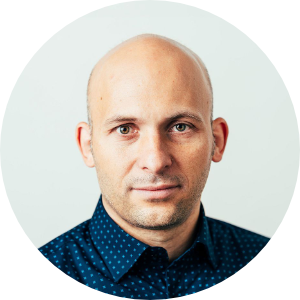
Nico Hochgeschwender
University of Bremen
more details
Prof. Dr. Nico Hochgeschwender - is Professor of Software Engineering for Cognitive Robots and Systems at the University of Bremen, where he leads the SECORO research group. His research lies at the intersection of AI-enabled robotics and software engineering, with a focus on safety and dependability, validation and evaluation, benchmarking, and domain-specific modelling for robotics. He coordinates the MSCA Doctoral Network CAVECORE on continuous automated validation and evaluation of cognitive robots and is Co-Speaker of the Robotics Institute Germany (RIG) Technical Cluster on Safety for AI-enabled Robotics. From 2019 to 2025, he served as Co-Chair of the IEEE RAS Technical Committee on Software Engineering for Robotics and Automation.
Autonomous robots operate in increasingly complex and variable environments, making it almost impossible to anticipate all relevant situations during the validation process. Instead of relying on individual test cases, this talk explores how explicit scenario models can define structured test spaces from which concrete and reproducible robot experiments can be systematically generated and executed in both simulations and real-world settings. I will discuss how such executable test spaces can help relate operating conditions and safety requirements to observed robot behavior and what challenges remain regarding coverage and the use of test results as evidence for safety assurance.
From Test Cases to Test Spaces -- Scenario-Based Validation for Safe Autonomous Robots
Autonomous robots operate in increasingly complex and variable environments, making it almost impossible to anticipate all relevant situations during the validation process. Instead of relying on individual test cases, this talk explores how explicit scenario models can define structured test spaces from which concrete and reproducible robot experiments can be systematically generated and executed in both simulations and real-world settings. I will discuss how such executable test spaces can help relate operating conditions and safety requirements to observed robot behavior and what challenges remain regarding coverage and the use of test results as evidence for safety assurance.

03:00 p.m.
Open
Open
open
more details
...

4:30 p.m.
Closing
Niels Syassen
CTO / Member of the Executive Board
Moderation
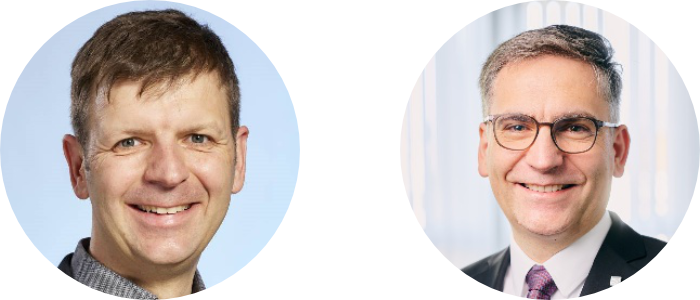
Magnus Albert & Mario Trapp
SICK AG & Fraunhofer IKS


