student contest
sick$10k challenge
Sign up for your chance to enter the competition
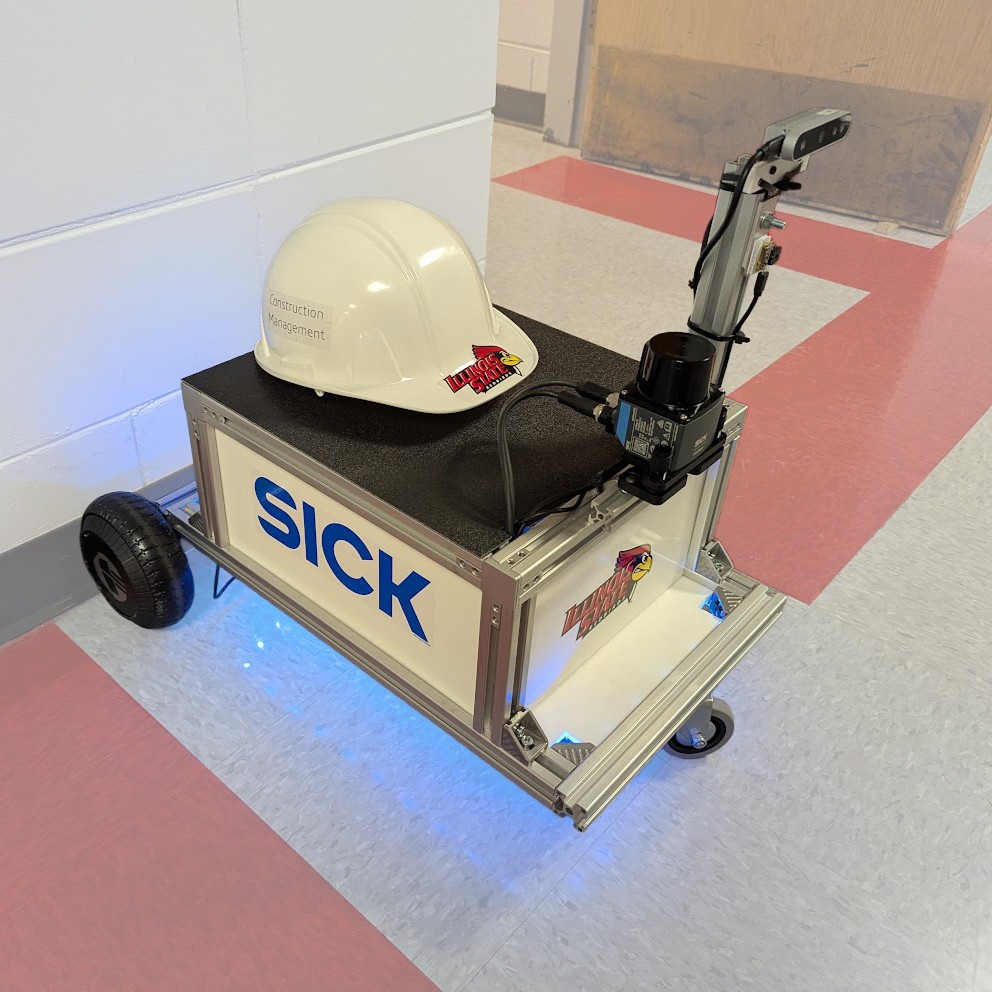
REGISTRATION IS now open FOR THE 2026-2027 ACADEMIC SEASON
For the 9th year, SICK, Inc. is excited to announce a challenge for universities across the US and Canada to support innovation and student achievement in automation and technology. Fifteen teams will be selected to participate in the challenge, and the chosen teams will be supplied a compact but powerful 2D LiDAR (picoScan150) and accessories. The teams will be challenged to solve a problem, create a solution and bring a new application that utilizes the SICK scanner in any industry.
Challenge Resources:
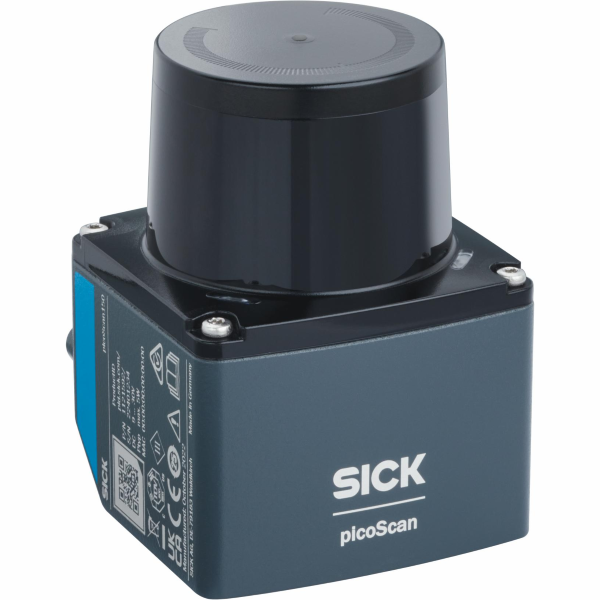
about the picoscan100
With a large scanning range, fine angular resolution and high sensitivity, the 2D picoScan150 LiDAR sensors are setting new standards through being able to reliably detect small and dark objects and deliver exact measurement data that can be integrated through various communication interfaces. The compact picoScan100 sensors are equipped with multi-echo technology, have a rugged housing and ensure reliable measurement results even under harsh ambient conditions. They solve demanding industrial applications in indoor and outdoor areas.
At a Glance
- 276° horizontal field of view
- Up to 50hz scanning frequency with resolution as high as 0.05°
- Working range of 0.05m to 120m
- ROS1, ROS2, C++, Python drivers available
awards
The top 3 finishing teams wil
- 1st Place: $10,000
- 2nd Place: $5,000
- 3rd Place: $3,000
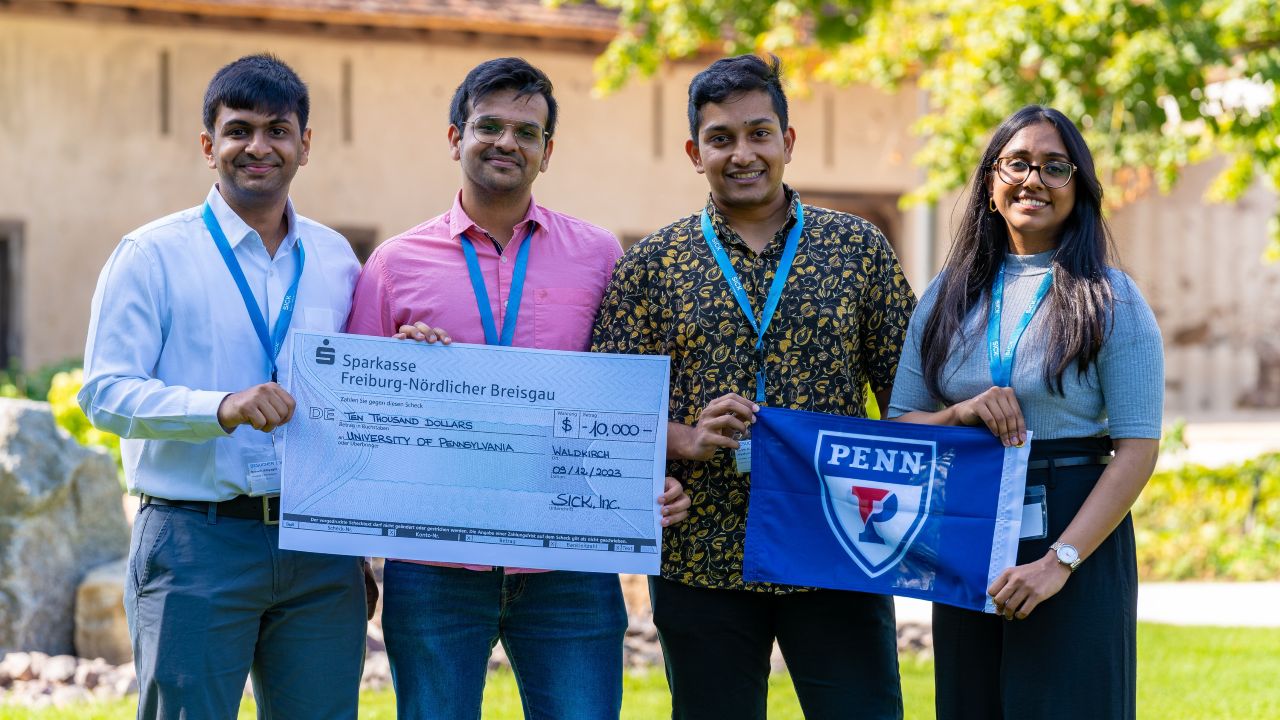
2025-2026 SICK$10K Challenge Winners
First Place - Northeastern University with SICK-IGNASCAN
SICK-IGNASCAN is a wildfire forecasting technology developed by Northeastern University’s River Lab that measures vegetation moisture more quickly and accurately than traditional sampling methods. Using low-cost LiDAR, hyperspectral imaging, and 3D mapping, it creates detailed moisture maps that help identify wildfire risk. The team plans to offer vegetation moisture datasets as a service to fire agencies, enabling better forecasting, resource allocation, and prevention efforts. They also intend to sell a 2D-to-3D LiDAR conversion kit and expand into applications such as agriculture, soil analysis, and environmental monitoring. By providing continuous, high-resolution data, the system could improve wildfire mitigation and help save lives.
Second Place – University of Memphis with STREAMEYE
StreamEye, developed by engineering students at the University of Memphis, is an aerial stream assessment platform that automates the costly and labor-intensive process of surveying waterways for municipalities and other regulated entities. Using a SICK PicoScan LiDAR sensor, drone-based 3D mapping, video, and AI-powered image recognition, the system automatically measures stream characteristics, identifies erosion, illegal dumping, and other hazards, and geo-tags assessment data. The team estimates that StreamEye can reduce survey costs by nearly 97% while completing assessments in one month instead of nine. To scale the solution, they plan to offer training, manufacturing, licensing, and subscription-based support, with future expansion into aquatic and wildlife monitoring through autonomous buoy drones.
Third Place – University of Minnesota with CARTRON
CarTron, developed by the University of Minnesota Computer Science Department, is a fully autonomous shopping cart retrieval system designed to reduce the labor, cost, and safety challenges associated with collecting abandoned carts. Using SICK LiDAR, cameras, GPS, AI-based object detection, and robotic navigation, the system identifies stray carts, locates them with centimeter-level accuracy, safely navigates around vehicles and pedestrians, and uses a six-degree-of-freedom robotic arm to return carts to the store. The solution addresses labor shortages, employee injuries, and the significant costs retailers incur from manual cart retrieval, while freeing staff to focus on customer service and other higher-value tasks.
Challenge Registration


